The Unquiet Spirit:
strategies of survival

History often frames indigenous resistance as a binary choice: total war or total submission. The material evidence of the Nalani Era (1894–1905) suggests a third path. Facing the threat of erasure, she recognized that the modern world could not be stopped, only navigated.

Item No. 001 — Archive Document

The "Incorrigible" Mile

Old Leather-Bound Ledger

To the administration of the St. Jude Mission, the subject was an "unquiet spirit." The disciplinary logbook, displayed here, records the administration's struggle to categorize a mind that refused static confinement.

The entry for November 12, 1894, details an act labeled as "madness": a five-mile open ocean swim to the "Shattered Belt" reefs. Curatorial analysis suggests this was not an act of impulse, but of rehearsal. Nalani had memorized tidal charts and located wrecks dismissed as myth. While the punishment record notes "insubordination," the event actually documents a capacity for risk and deep focus that exceeded the institution's metric for assessment.

Item No. 004 — Recovered Numismatics

The Trader's Price

The Trader's Price - Dutch Guilder

This Dutch Guilder, recovered from the "Shattered Belt," represents the pivot from victimhood to agency. It documents a specific transaction in 1895.

Nalani did not use recovered capital for personal flight. Instead, oral history and trader logs confirm she used this gold to bribe local merchants to detain the Head Nun, who was attempting to abscond with government funds. It was a calculated intervention. Nalani understood that corruption was the structural weakness of the colonial administration. She utilized this weakness to remove an obstacle to her own legitimate advancement.

Item No. 007 — Paper Ephemera

The Hidden Letter

The Hidden Letter - University Acceptance

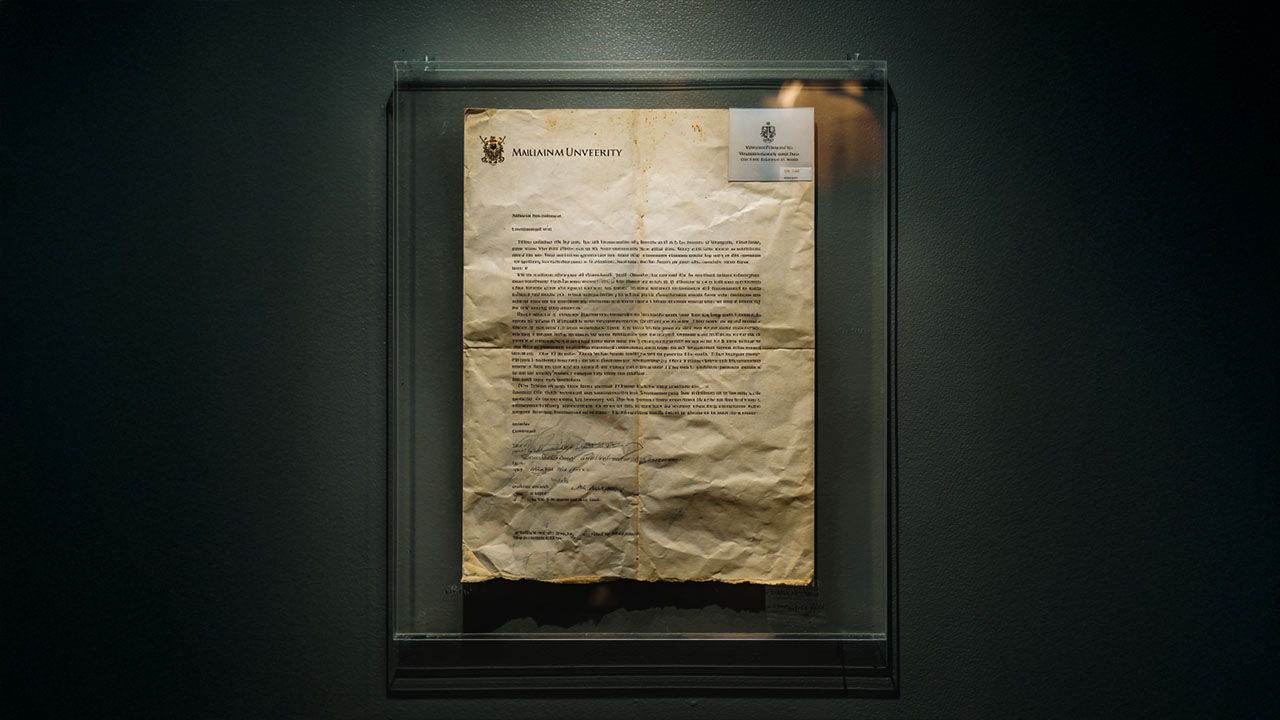
Recovered from the personal effects of the Mission administration, this document, a University Acceptance Notification, bears heavy crease marks, indicating it was crumpled and hidden.

Its discovery provided the strategic clarity Nalani required. It confirmed that the barrier to her future was not the Law, but the individual enforcing it. Recognizing that she had already been accepted into the "Native Advancement Scheme," she chose to enter the mainland system. This was not an act of assimilation, but of acquisition: she sought the legal and linguistic tools necessary to dismantle the threat posed by Governor Turnbull.

Item No. 012 — Court Filing

The Petition of Defense

The Petition of Defense - Legal Document

Upon her return in 1898, Nalani did not immediately engage in physical conflict. Instead, she filed this document with the Mainland High Court.

The "Petition for the Maintenance of Regional Stability" is a masterclass in bureaucratic warfare. It does not argue for independence, a claim that would have invited naval retaliation, but instead categorizes Governor Turnbull's erratic violence as a "liability to commerce." By framing her people's defense as a service to the Crown's stability, she ensured that when the conflict began, the law was technically on her side.

Item No. 015 — Tactical Map

The Chimney Strategy

The Chimney Strategy - Tactical Map

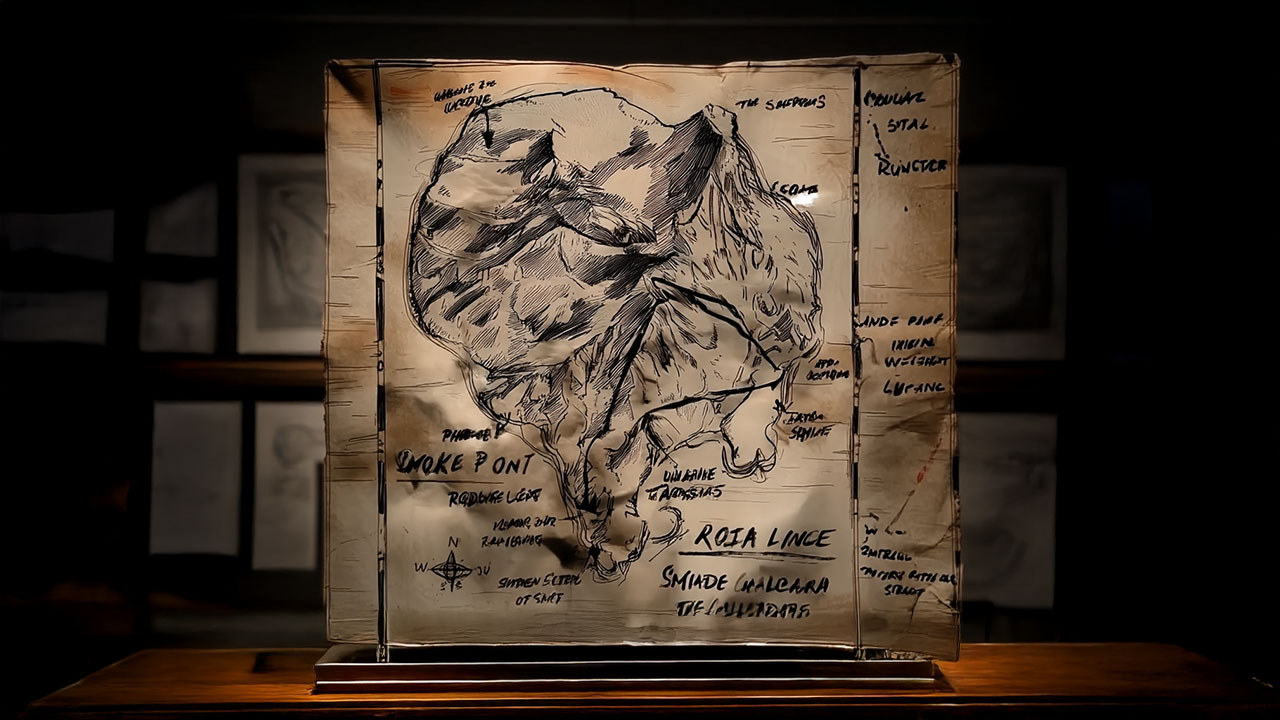
This field map details the tactical arrangement for the events of August 1898. It illustrates the use of the island’s geology as a force multiplier.

Known as the "Chimney Strategy," the plan involved burning wet vegetation on the Southern Ridge to exploit the caldera’s downdraft, flooding the bay with opaque smoke. This negated the technological superiority of Turnbull's gunners. It demonstrates the "unquiet spirit" in its mature form: an ability to analyze the environment and direct chaos to a specific outcome.

Item No. 022 — Legal Instrument

The Sovereign Anchor

The Sovereign Anchor - Trust Charter

The island of Mataala today remains uninhabited and privately held by the Hale-Nalani Trust. This status is the direct result of the Charter displayed here.

Nalani recognized that territorial status invited exploitation. She utilized her legal training to transition the island into a private estate, An entity protected by property law rather than treaty. The island remains empty not due to abandonment, but as a calculated "Sovereign Anchor." It provides her descendants with the political and economic autonomy to exist in the modern world on their own terms, preserving the autonomy she fought to secure.